
This coming Monday, my lesson will be on the Holy Spirit, the Third Person of the Trinity, and I plan to also talk about the mystery of the Trinity.
I’ve been observing a thread on Catholic Catechist dealing with how to teach the Trinity. One suggestion caught my eye. It is from a catechist named Cheri and I think it is a good approach:
Use ice, water, and steam as a visual aid. Show your students how they are all the same substance (H2O) but have different appearance and manner of being. So it is with the Father, the Son, and the Holy Spirit.
|
|
|
|

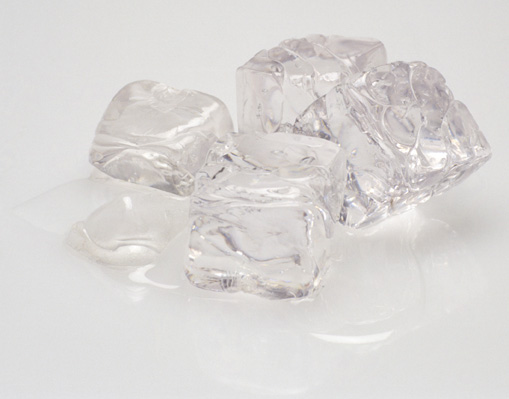
I know that no metaphor is perfect, but this sounds like a nice way to engage them with the mystery of the Trinity. Ultimately, I want them to know that the Trinity is an intimate community of Persons (so intimate, they are ONE) whose essence is selfless loving relationship. Made in God’s image, which is Trinitarian, we are called to live in community, offering selfless love to others.
What are your thoughts about the water, ice, and steam approach? Do you see any major flaws that I’m missing?





Since this is the type of thing that is taught in 8th grade science, I think it is a very strong metaphor for explaining the Trinity. Thank you for sharing it!
The problem I have, is with the 1st graders I teach. There is a lesson each year on the Holy Trinity, but the objectives are not about teaching the Trinity at all, but on how to share and help your neighbor.
At what age do you think the concept of the Holy Trinity should be introduced and would you dare to even attempt to introduce it to a 1st grader?
Peter
It is always heart-warming whenever i get the chance to read your lines in the Catechist’s Journey (once a week at the most)… always comforting to realize that we have fellow brothers and sisters across the globe, with the flaming desire to bring the Good News to the ‘Little Ones”.
Comparing the “Holy Trinity” to water, ice and steam is a wonderful way to explain the Mystery, Joe! I will try that one when i have that topic.
A catechist-friend shared with me another idea:
Myself as the “Holy Trinity”.
~When i am in school/parish, i am a Catechist, wearing a little cross, bringing some visual materials, singing songs for the Lord, being a “foster father” to these young people..
~When i am with a client, i am an Architect, looking a bit like a professional, making some sketches, thinking Art & Design, doing business..
~When i visit my parents in Manila, i am just their simple son “Boyette” ( they fondly call me ), just lazying around the house, smelling Mama’s cooking, feeling like a child again..
In the end, i am (still) just one person, but with different “roles” in life. What do you think?
Thanks also for sharing how you handled the “giggling” of the children during your first session, reminding them that they are no longer kids, and that a “mature behavior” would be apt… and how you showed your appreciation when they responded positively. You could imagine my 4th year students (@ 60 per class) !!!
Thank you Joe for letting me share.
May God bless us all, in this journey.
I think usin g the ice, water and steam is a great idea to get the message of the Trinity across. the mystery of the Trinity is not easy to explain to adults, how much more to youngsters! I have been thinking of ideas to get this message across as simply as I can. This idea can simplify things for me too since I have adults in my group who are not exactly keen on theology. I intend to use this on my group. I will let you know how they accept the idea and their reactions.
Hi Joe. What a great image! I sure don’t see any flaws in explaining the Trinity this way. The mysterious part in using ice/water/steam is that the cycle starts all over again. Steam can turn back into water. Water back into ice!
For whatever reason, I also immediately associated the steam with incense, another image of our prayers going to heaven (but not sure 8th graders would make that image association).
It’s so hard to explain the Trinity. I’m just reading a book: This Is Our Faith by Michael Pennock. He says that explaining the Trinity is like trying to explain a kiss, defined as “a caress with the lips, a gentle touch or contact”. That definition of a kiss, of course, cannot describle the feeling a baby gets from his mother’s kiss or the feeling of a you couple exchanging a kiss goodnight after realizing they are in love. Accepting the Trinity’s mystery is part of our acceptance of God. Not sure I’d use the kiss analogy with 8th graders. Some of them may not need any more encouragement to kiss than they already have 😉 but I felt it was an interesting analogy.
Excellent image with the water, ice, and steam Joe! Good Luck
I do something similar in my class, I think I posted at the original thread. I’m in my 6th year, and haven’t found a better analogy.
Nothing wrong with this approach however I would not put all my eggs in that one basket. While it effectively emphasizes the oneness it lacks the “personal”ness of the persons in the Trinity making God seem more abstract in my mind. Why not also include some art work or visual symbols of the trinity as well. If you are emphasizing community the famous icon of the 3 persons from the old testament is a personal favorite. The Selfless giving one of the Trinity Cross images that include the Father upholding the son on the cross accompanied by the spirit. I feel lik offering a variety of images does better justice to our God who cannot be cubby holed.
Sorry, plenty wrong with this approach and it will therefore confuse your students!! This is the heresy of Modalism, check the Catechism of the Catholic Church, paragraph 254. “Father, Son, Holy Spirit are not simply names designating modalities of the divine being for they are really distinct from one another.” The Trinity are three distinct persons within the one Godhead- look at the Athanasian Creed, Catechism paragraph 266.
Again using the analogy of one person with different roles in life reflects this same heresy.
Marianne, thanks for weighing in here and I think your caution and correction are important to keep in mind for those of us who are teaching the Trinity. It can help to shape what we say and teach. At the same time, I remind you that what we are talking about here is a metaphor, so your use of the word heresy (the willful and persistent rejection of any article of faith by a baptized member of the Church) is a bit over the top. No one here is rejecting an article of faith…simply searching for ways to teach it to young people in a way that they can begin to approach the mystery of the Trinity without simply dismissing it as being too confusing. In Scripture, God is referred to as “my Rock” (Psalm 18:2) yet no one is to conclude that God is indeed a rock…it is a metaphor. Metaphors are always imperfect and yet can help us to deepen our understanding of various realities. Most young people (in fact, most adults) do not understand the concept of modalities so we need to find ways to explain such complexities to young people. Secondly, within the context of a metaphor, one can argue that water, ice, and steam are indeed distinct yet “consubstantial” and therefore can be a way of approaching the mystery of the Trinity: 3 distinct persons in One God. The key is to emphasize the distinctness of the Persons of the Trinity while also emphasizing consubstantiality. The important thing is that young people (and all Catholics) need to know that we are called to share in the life of the Trinity: the selfless loving relationship of three Persons in One God. They also need to know how to talk about this distinctiveness of the three Persons in such a way as to not conclude that we worship 3 gods. Therein lies the challenge for catechists. With that in mind, I invite you to share your thoughts on how to help young people begin to grasp the mystery of the Trinity. We need workable strategies (inspired by the Catechism but that go beyond just quoting the Catechism) for speaking to young people about this crucial doctrine of our faith.
we try to explain the Blessed Trinity to graders this way.
God the Father is the creator, God the Son is the redeemer and God the Holy Spirit is the sanctifier. three distinct persons.
It is as if an egg: egg yolk, egg white and egg shell. yet only one egg.
it is just like the sun: light, heat and power. only one sun.
or a 3-in-1 coffee: coffee, sugar and creamer. yet only one cup of coffee.
or 5 fingers but only a hand.
or Tuan Korban family: composed of a father Tuan, a mother Amparo and children My and Bea. only one family but several persons.
with this last example, emphasis on the oneness of family. no second family for Tuan Korban.
My, thanks so much for sharing your Trinity ideas with us!
Hello Joe;
I love it; & I’ve studied different views of the Godhead, for a long time. I like it better then the egg shell, yoke, & white, because, the doctrine of the Trinity stresse’s shared substance if you would. Here it’s all H2 0. It’s very logical, in that there’s one element yet uniquely 3 forms all rolled up in a logical expression. I’ve been talking with people involved with Islam, & this factor of one is very important to them, so I shared you’re analogy, & will continue to share it. To the one negative commenter, I would say this is a mystery, & we see things in a glass darkly as the Apostle Paul said, so to come up with a better analogy is beyond me.
Thanks, Rob…very true about the importance of oneness.
Isn’t God the Father, Son and Holy Spirit all at the same time? I love the ice, steam, water analogy, but you can’t be all forms of water at the same time time so that is one issue I have with it. I guess there is no “perfect” analogy and that is why the Triune God is a true “mystery” or a truth that we only know because of our faith? I am only starting to look into teaching this concept to my 5th grade class so haven’t really thought about too much yet.
If anyone has any fun games or activities related to this concept, please share. Thx!
I looovvveee this water, ice, steam theory. It seems easy to explain so I plan to use it to teach my biblestudy class. I just have to find an activity and way to demonstrate it to the kids. Thanks.
Hi! I’m a catechist in Nairobi Kenya! I’m teaching the Trinity to ten year olds this coming Sunday. Yeah I love the ice etc approach because of the idea that it is the same substance but 3 distinct states of being. I was a bit hesitant about this analogy because I wouldn’t want the kids to think that it is one being in 3 different manifestations(like split personality! what Marianne was talking about) or 3 different beings… But on second thought, I think it really is a good metaphor (3 distinct states of being but one substance). As for the issue of the Father being the principle, the Son being begotten from him, and the Spirit proceeding from the Father as the first principle but also from both the Father and the Son because the son shares in all that the father is… Not sure I’ll go there because being ten year olds, they may think that the Father is the most important then the son than the Spirit! But I’ll try and then tell them we can really understand because our minds are limited and that the bond between the persons is LOVE.Someone help with that?! Thanks:) God Bless! And may the Holy Spirit speak in me! But I will emphasize that we can’t find a perfect analogy since it is a MYSTERY (Story of St. Augustine and the little boy at the sea…)As for the coffee sugar and creamer.. ok, but they are different substances so I guess as someone said here, it’s best to use many analogies and emphasize that none is perfect or complete. Show in which way one works and in which way it doesn’t.
Correction to me! I mean I wouldn’t want them to think it is three different Gods (not beings/ persons)
I as a 3rd Grade Catechist am confused! I believe that the concept of the Holy Trinity should be introduced in 2nd Grade as most are making their First Holy Communions. God is our Father, who sent us His Son Jesus, and then when Jesus left the earth He sent us the Holy Spirit to be our Helper and Guide. So, while the concept of the Holy Trinity can be introduced in 2nd Grade, I would not be so concerned really until they are in 4th Grade and their minds are capable of handling a bigger concept. We are all one person. We are brothers, sisters, nieces, nephews, children, grandchildren, students, and athletes. So, just like we are many things, we are only one person. So, too is the Holy Trinity 3 Persons in One!
Thanks RA, but I’m not sure what you are confused about.
I really like the solid, liquid, vapor concept. To build on that, there is a concept called triple point in thermodynamics where these three phases can coexist in a stable equilibrium at a defined temperature and pressure. This is true for water as well as other materials. God is the triple point where Father (solid) Son (liquid) and Spirit (gas) coexist in a stable equilibrium of perfect love.
There is a painting of three lovely persons sitting at a table together…I really love to see this painting! Each resembles one another yet is not a copy of one another. This speaks to me of the Holy Trinity. The Son comes *from* the Father as His Word while through the passionate Love they share there is a continual creation of the Holy Spirit. Each is very individual and with real identity within themselves who are in continual active Love with each other…Love is their shared ‘substance’ that is forever returned and exchanged as in a kind of circle.
I think this is a beautiful and simple way to help children and non believers see a visual of who God is. There is nothing wrong with this analogy, so long as you remind “students” (and non-believers) that God exists in three forms, but 3 distinct forms, 3 distinct Persons. Not one person divided by 3. So there you go. God will bless whatever way you choose to teach the Trinity when it comes from a pure heart. Don’t be intimidated by people who chastise this and write 17 pages about how it’s rooted in “modalism”. NONSENSE. You can teach the Trinity giving the water, steam and ice analogy without fear of being some warped Christian. Bottom line: YES, the water, steam and ice analogy is an excellent, logical and sound analogy to teach Trinity, with the cavet that you make it clear: God is three distinct persons.
Thanks, Betricia…I like your way of thinking!