
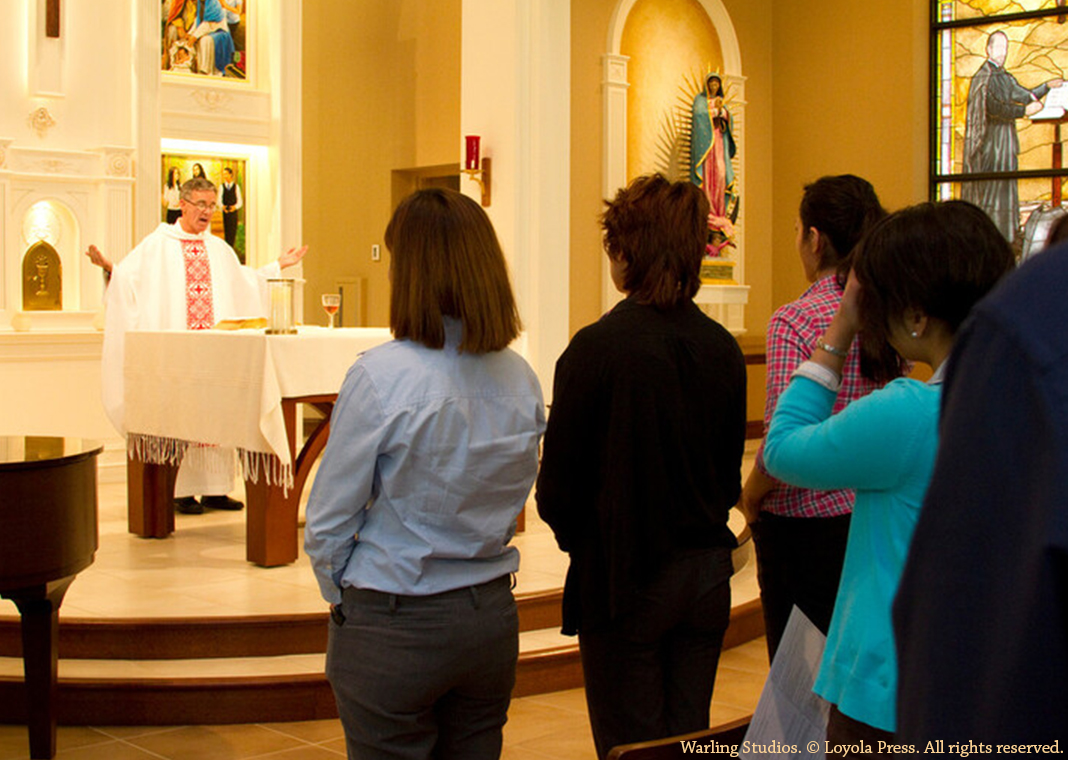
Many young people in parish catechetical programs don’t go to weekend Mass for a variety of reasons. Even so, catechists should always offer an inviting expectation that weekend Mass attendance is the norm. Here are some simple strategies.
1. Teach the importance of Sunday.
We all know the Third Commandment: “Remember to keep holy the Sabbath day.” Read from Pope John Paul II’s apostolic letter, Dies Domini, on the subject. “Sunday,” he wrote, “is a day which is at the very heart of the Christian life.” Help families recover a sense that Sunday is not complete without the Mass.
2. Teach the meaning of the Mass and the role of the people.
All catechists should study the Mass: what we do, why we do it, and what it means. Share what you learn about the Mass with students and promote full, conscious, and active participation. This is not just part of preparation for First Holy Communion. More importantly, an effective liturgical catechist understands how to live the Mass and shares the value of that.
3. Teach both the meal and the sacrifice.
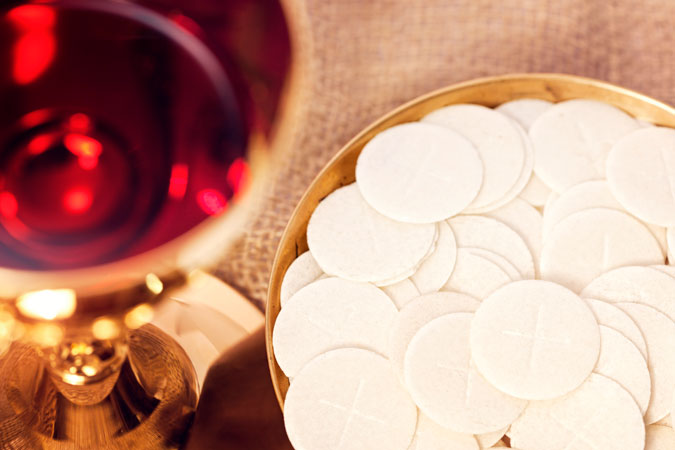
Too often, we teach children that the Mass is only a meal. We do come to the table of the Lord to be nourished by Word and Sacrament. We also come to reenact the sacrifice of Jesus Christ; we offer ourselves—not just the bread and wine—to be changed into people of sacrificial love. (See CCC 901 and Lumen Gentium 34) Teach children that by offering themselves as living sacrifices, they can be changed to become more like Jesus.
4. Always make classroom connections.
Liturgical catechists integrate elements of the Mass into their classrooms, such as the colors of the liturgical season, symbols used during the liturgy, postures and gestures of the Mass, and the verbal formulas used during the Mass. This helps young people develop a comfort level with ritual action, language, and symbols. These connections reinforce the importance of the liturgy and its significance for all Catholics.
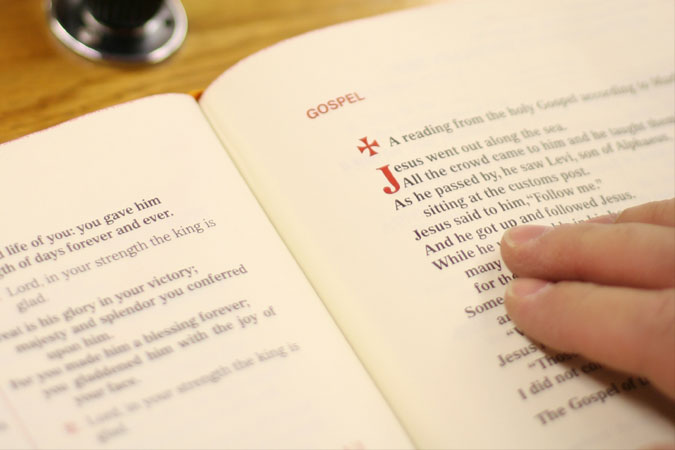
Certainly, the textbook includes Scripture passages, but engaging with the Sunday Gospels is a primary way to help young people develop a fully Catholic lifestyle based on living the liturgical year. Catechists should regularly proclaim and refer to the Gospel readings from the Sunday liturgy, benefitting not only those who hear these words at Mass, but especially those who won’t be at Mass to hear them.
Here are four ways to connect your class to the Gospel reading from Sunday’s Mass:
- Formally. Use the Sunday Connection or another resource that includes the Gospel readings to open or close the session. This will remind students and parents about attending Sunday Mass.
- Informally. Make references to the Gospel reading from Sunday’s Mass during classroom discussions. Such references can help demonstrate how the Gospel readings can be applied to our daily lives.
- Visually. As a classroom activity, invite students to engage with picture Bibles, videos, and creative exercises such as drawing or acting out a scene from that Sunday’s Gospel reading. Use a picture and engage the young people in visio divina (“divine seeing”). Project a picture on a screen or provide a paper copy to each student, and have them study it for a few moments in silence. Then ask them to share what they see.
- Imaginatively. Make use of guided meditations to bring the Gospel scene alive. Invite students to imagine themselves in the place and time of the Gospel story. Describe the scene for them, or read the words of Scripture. Ask them to observe what they see and interact with Jesus or other characters in the story. Afterwards, allow children some quiet time to pray or write in a journal.
5. Connect the domestic church to the liturgy.
Try sending home prayer and activity ideas as each new season of the liturgical year begins. Invite families to study the readings together by subscribing to the Sunday Connection. You can also e-mail parents links to good liturgical videos.
6. Encourage family Mass attendance.
A catechist I once knew invited families of his first graders to meet in the back of church before Mass and to sit together as a class. After Mass, they went out for donuts. This approach can help non-participating parents become comfortable with the community and come to know one another as part of the Body of Christ. The most important thing we can do for children and youth is to give them a sense that they are a vital part of the Church.



I try to extend parts of the mass to my students. We have a wonderful group of children who enjoy our class and we also play games and puzzles that are about our Catholic Faith. I also have 2 very helpful assistants who have children in class,our class has 14 students. They are very smart, we are also reviewing for the ACRE exercise and the children are doing very well, I am proud to be their teacher. Thank you for your information.